Saturday, October 22, 2011

MIPP Collective Exhibition at Valverde, Sicily

The Malta Institute of Professional Photography (MIPP) will inauguarate a photographic exhibition under the title ‘Streets of Malta’ on Friday, October 28, at Galleria Fiaf - Le Gru in Valverde(Sicily). 

Giuseppe Fichera, president of Gruppo Fotografico Le Gru and Santo Mongioì, director of Galleria Fiaf - Le Gru will introduce the event. The exhibition will remain on till November 4, 2011. 

Exhibited photographic works are by MIPP members: Adrian Camilleri, Alexandra Pace, Andrew Galea Debono, Anthony Grech, Astrid Pardew, George Abdilla, Hilary Spiteri, John Ambrogio, Joseph Herbert, Kevin Casha, Omar Camilleri, Owen Vella, Ruben Buhagiar, Reuben Chircop and Sergio Muscat.


Sunday, October 16, 2011

ST. Art Project


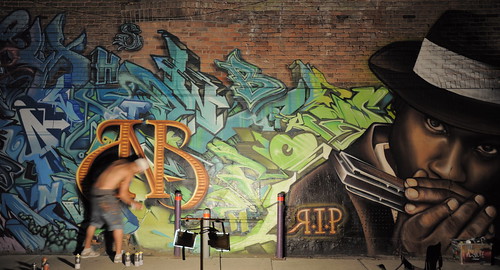
Recently, I have attended an interesting conference launching a new project under the branding ST.ART.  This aims to bring together street art forms and art education aimed to be used as a bridge to re-establish communication between young people and local community and to strengthen the sense of common ground and interest.
The specific objective of the ST.ART project is to help young people acquire the basic life-skills and competences necessary for their personal development, for future employment and for active European citizenship. The main aim of this project is to get to know the difference between aesthetic and street art forms, graffiti and vandalism, and how different choices can lead to different consequences.
The project aims at encouraging wider arts participation, creative teaching and learning through a new integrated methodology that combines Web 2.0 and Open Sim. This new kind of platforms integration creates a Virtual Learning Environment (VLE) that aims at developing an innovative learning environment in order to:
  • - improve students’ transversal skills as digital, social and civic competences, sense of initiative and entrepreneurship, cultural awareness and expression;
  • - encourage students’ creativity through developing street art works in Open Sim environment.


The performing arts are used to carry the message and spread information in exciting visual ways that capture the attention of users.
As MELISSA HUGHES states in her STREET ART & GRAFFITI ART: DEVELOPING AN UNDERSTANDING, “Enabling students to think critically for themselves is unquestionably integral to their development as young adults, and this type of critical thinking can take place inside the art classroom. The artistic process offers infinite opportunities for creative thought, personal expression, and problem solving. When students are deeply engaged in constructing meaning by looking at art, discussing, or constructing it, they grow artistically and personally.”
Through out the two-day conference one had the opportunity to meet foreign art teachers and share ideas.  Very interesting sessions were organised having the intervention of foreign scholars about the subject. Workshop 3 turned out to be an exhaustive but informative featuring Street Art in relation to art history and its proceedings. Following are the number of lectures presented:
Art assessed over time
Chair: Ms. Monica Fasciani – University of the Studies Guglielmo Marconi

Overview of art works in Malta
Mr. James M. Grimaud - artist

The WAVES project: an experience of urban culture
Ms. Simona Galizia – Delegated to the Youth Policy by the Mayor of Civitavecchia -
coordinator project Waves

Street art or graffiti?
Mr. Cedar Lewisohn – artist, writer and curator

From street art to urban art
Mr. Dario Morgante – curator of Mondo Bizzarro Gallery in Rome
Being against.

Remarks on Rebellion and Recognition through the history of art
Ms. Irene Baldriga -  teacher
ANISA Associazione Nazionale Italiana Insegnanti di Storia dell’Arte


Tuesday, October 11, 2011

Academic Artistic Training in early British Malta | Forthcoming publication


Academic Artistic Training in early British Malta

Hilary Spiteri has woven together the history of the rise and decline of the School of Design, set up by Mgr Francesco Saverio Caruana, and discusses it in a meaningful art historical context. The book summarises the research for a Master’s thesis that he defended in the Department of History of Art at the University of Malta. Its great merit is the way in which it broadens and adjusts our perspective of the artistic scenario of early British Malta and to show how, in spite of the decline in official patronage, the University, under the enlightened direction of Mgr Caruana, succeeded in providing Malta with a respectable art academy. This was not an anticlimax but a new beginning and a benchmark development in Maltese Art History.

Professor Mario Buhagiar


The book will be out on November 4, 2011.  It will be available for sale from leading book stores and online from ALLIED PUBLICATIONS.

Monday, October 10, 2011

Art in danger!

I was recently reading The Art Newspaper and an article entitled ‘Arts education in England threatened’ featured. This brought to my mind our educational progress and reformation and the way it is affecting the humanities, especially art, in our schools.  This is something occurring globally and to a certain extent even in Malta’s educational curriculum. Art is demoted and thus being considered as an added or vocational field of study.


Anny Shaw, correspondent for The Art Newspaper brought to the light the concerns brought forward by the Cultural Learning Alliance (CLA) and Arts Council England about the eminent cut of the arts subject from secondary school education in England following the introduction of the English Baccalaureate. As stated, pupils are to be ranked according to grades scored in five core subjects being: maths, English, science, a language and either history or geography.


I believe that the arts are facing a hard time. An increasing interest in generating an empiricist and scientific frame of mind is placing aside the arts. In Malta, the arts have suffered throughout.  Since the early nineteenth century, art was one of the major subjects offered in our curriculum, until it was demoted and noted as being an additional subject.  Locally, students who have an artistic inclination are being deprived from having the opportunity to study the fine arts. A case in point, Malta’s highest body of education does not offer a degree in fine arts.  In turn, students have to find other alternatives. They have to further their studies on a personal basis, either locally or more-likely to attend foreign universities.


One ought to ask; is this the right way to go? The pressure excerpted from the technological progress is to undermine the arts?


Being an educator and art teacher, I daily encounter a good number of students who lack initiative and creativity. Unfortunately, this is a phenomenon that is gaining momentum quite rapidly in our schools. Contrastingly, these two artistic qualities are also considered as pre-requisites when considering working in well-established technical posts. In fact technical establishments constantly show their concern that the present generation of apprentices lack the urge to create and produce something innovative in an ever-growing global entity, where everything is considered as discovered and pre-emptied.


Are we to compensate for this lack? Should art related subjects further generate and enhance the student’s innate creative abilities?


Is the philosophy of making more attractive science oriented subjects going to be fruitful? Is the shelving of art oriented subjects going to back-fire in the long run?


These are some of the issues which our educational establishments should address. I believe that our education should offer a holistic approach allowing equal opportunities for those students who opt to study the arts.  Anna Culter, the director of learning at the Tate and a member of the CLA, hits the bull’s eye when saying that “if arts subjects are taught with rigour, they add values and competencies and a capacity to think imaginatively and differently, which we need in a society based on innovation. It's what we valued in the Renaissance, this wide range of knowledge that inspires innovation.”  This affirmation should become a main focus in an expanding educational and pedogical conscience.


One finds it difficult to apprehend the way art is growing to become something related with our civilisation’s glorious past, the history of great social eras (Renaissance, Baroque and many others). Our curricula are growing to be more nostalgic rather than generating a sense of belonging through the application of the arts, which will eventually set the ball rolling in drafting our future.

Saturday, September 10, 2011

Rotta tal-Arti 2011 - The Inauguration - September 9, 2011

Resting Boats & The Fight
2nd Floor

Yesterday, I was present at Dar Partit Nazzjonalista for the inauguration of the 6th consecutive exhibition entitled ‘Rotta tal-Arti’.  This exhibition, which was inaugurated by the Maltese Prime Minister Dr Laurence Gonzi, forms part of the Malta Independence festivities, which are organised annually in Malta.

This exhibition is one of the vastest exhibitions annually held in Malta under one roof.  It comprises different art forms including sculpture, ceramics, paintings and mixed media.

Inauguration of the 2008 exhibition by Prime
Minister of Malta Dr Laurence Gonzi
One is also to note that this exhibition honours late famous Maltese artists.  In fact a section of this exhibition is dedicated to renowned names such as Wille Apap, Ċensu Apap, Anton Agius, Emvin Cremona, Antoine Camilleri and Victor Diacono.

My works are exhibited in the second floor of the building.  For further information about my works, The Fight and Resting Boats, please follow this link: Rotta tal-Arti 2011.

Entrance to the exhibition is free and it will be open to the public until the 30th of September 2011.


Monday, September 5, 2011

Modern Artistic Sensibilities in Maltese Art - The Exhibition


Recently Heritage Malta has invited me to what I consider as a major event when it comes to reassess Modern Art in Malta. I was present to the official book launch of ‘Pioneers of Modern Art in Malta’ written by Prof Joseph Paul Cassar. This event was accompanied by an exhibition entitled ‘Modern Artistic Sensibilities in Maltese Art’, also curated by Prof Cassar.  The exhibition featured Modern works of art from the National Collection and it was held at the National Museum of Fine Arts, Malta.


Heritage Malta in collaboration with Prof Cassar, organised an onsite lecture, in which Prof Cassar revisited a good number of the works exhibited.  His lecture was a very detailed and inspiring one.  


On a personal note, during this lecture, I recalled my past days at the UOM Junior College and University of Malta when I used to attend Prof Cassar’s enriching and well-prepared lectures.

Prof Cassar, who is reputed to be one of the major scholars on Modern art in Malta, in his book, sheds light on the Maltese modern artistic sensibility and states as follows:

“History makes it apparent that modern sensibility in the realm of the visual arts in Malta is a belated experience. This does not take away the efforts brought about through a group effort mainly by the Modern Art Circle, Atelier ’56, The Modern Art Group, The Artists’ Guild, Spectrum ’69 and Vision ’74...”


Biographical note:

Prof Joseph Paul Cassar is a practising artist, art historian, art critic, curator and educator. He was a decisively inspiring academic spearheading the formation of a generation of Maltese scholars, educators and professionals in the field before moving to University of Maryland University College where he is currently Professor of Art. He is also engaged in designing dynamic online art courses for the New York Times Knowledge Network. Professor Cassar is also one of the Malta National Museum of Fine Arts'  internationally acclaimed consultants and advisors. 

Sunday, September 4, 2011

Naqraw u Nirrimaw by Therese Pace and Hilary Spiteri


In 2009 poet and author Therese Pace and myself set on the market a set of six story/poem books for children entitled Naqraw u Nirrimaw.  This series is intended for children attending primary schools.  All the six books are fully colour-illustrated picturing a fresh application of the aquarelle medium.

Therese proposes an innovative way of writing and promoting poetry amongst children. In fact the short stories are all intended to compose short poems, which I am pretty sure that are appealent to a young audience. 

The illustrations show a high degree of creativity and immagination and all characters presented were created for the purpose of this series.


To buy book Naqraw u Nirrimaw 1
To buy book Naqraw u Nirrimaw 2
To buy book Naqraw u Nirrimaw 3
To buy book Naqraw u Nirrimaw 4
To buy book Naqraw u Nirrimaw 5
To buy book Naqraw u Nirrimaw 6